Compounded GLP-1 vs Ozempic: Which Weight Loss Treatment Is Right for You?
The landscape of weight management has undergone a seismic shift with the introduction of GLP-1 receptor agonists. For millions of individuals struggling with obesity or weight-related health issues, medications like Ozempic have offered a beacon of hope. However, the high cost and persistent shortages of brand-name drugs have led many patients to seek alternatives. Enter compounded GLP-1 medications—a rapidly growing solution that promises identical results at a fraction of the price. But what exactly is the difference between compounded semaglutide and Ozempic? Is one safer or more effective than the other?
This comprehensive guide dives deep into the comparison between compounded GLP-1 therapies and brand-name Ozempic. We will explore the science, the cost, the availability, and the real-world outcomes to help you make an informed decision for your health journey.

Understanding the Basics: What Are These Medications?
Before comparing the two, it is essential to understand what they are. Both Ozempic and compounded GLP-1 medications rely on the same active ingredient: semaglutide. You can learn about GLP-1 treatments for additional information. Semaglutide belongs to a class of drugs known as GLP-1 receptor agonists (Glucagon-Like Peptide-1). Originally developed to treat Type 2 diabetes, researchers quickly discovered its profound effect on weight loss due to its ability to suppress appetite and regulate blood sugar.
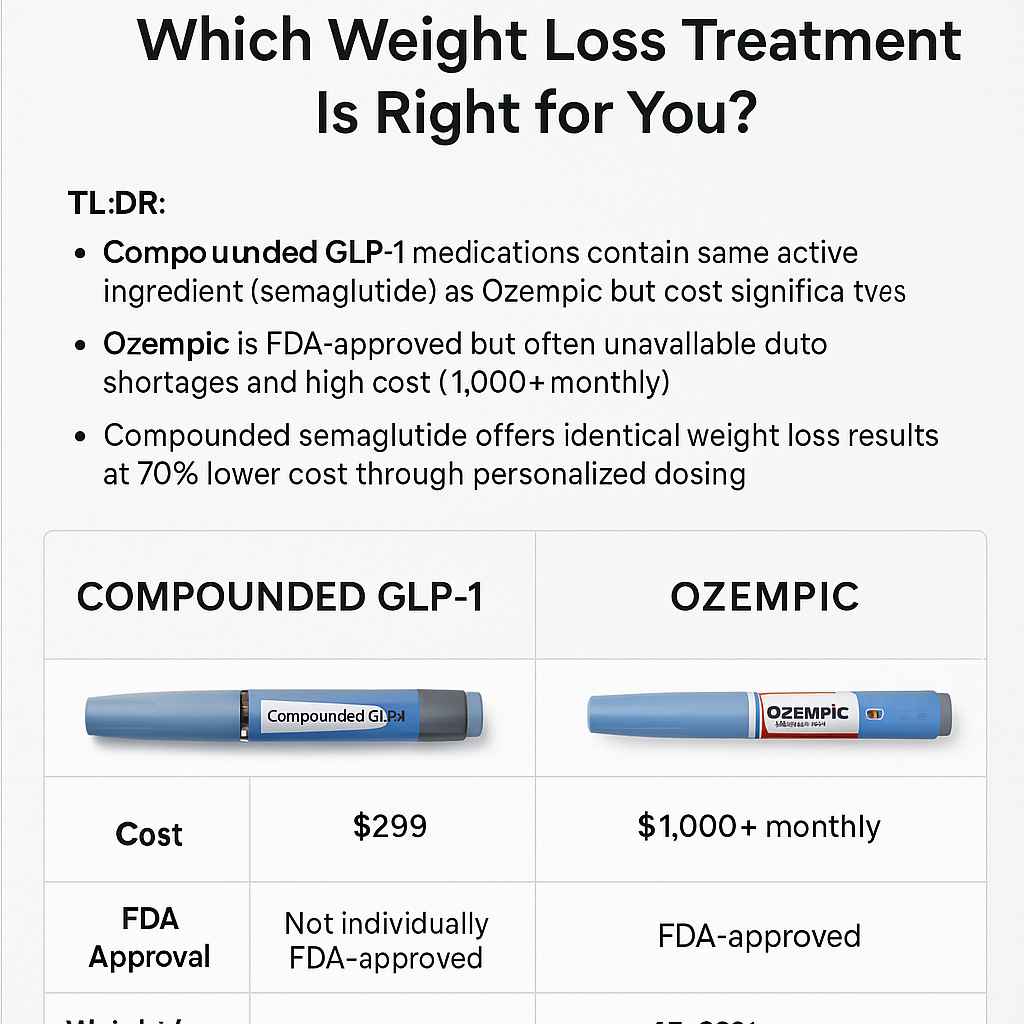
While the active ingredient is the same, the delivery method and manufacturing process differ. Ozempic is a pre-manufactured, FDA-approved pen injector produced by the pharmaceutical giant Novo Nordisk. In contrast, compounded GLP-1 medications are custom-mixed by specialized pharmacies to meet specific patient needs, often bypassing the supply chain bottlenecks that plague brand-name drugs.
What’s the Real Difference Between Compounded GLP-1 and Ozempic?
When patients ask about the difference between compounded GLP-1 and Ozempic, they are often surprised to learn that the core mechanism is biologically identical. The primary distinctions lie in manufacturing, pricing, and accessibility.
- Active Ingredient: Both contain semaglutide, the molecule responsible for weight loss and glycemic control.
- Manufacturer: Ozempic is mass-produced by Novo Nordisk. Compounded versions are made by FDA-regulated 503A or 503B compounding pharmacies (such as Belmar Pharmacy).
- Formulation: Ozempic comes in a fixed-dose pen. Compounded GLP-1 can be customized in dosage and concentration (often using injectable vials or sublingual troches) to suit individual tolerances.
- Cost: This is the most significant differentiator. Brand-name Ozempic is notoriously expensive, whereas compounded options are priced to be accessible.
While Ozempic carries the prestige of FDA approval specifically for diabetes (and subsequently prescribed off-label for weight loss), compounded semaglutide offers the same metabolic benefits. The choice often boils down to whether you want to pay for the brand name or the medical efficacy of the molecule itself.

How Do Compounded GLP-1 Medications Work Compared to Ozempic?
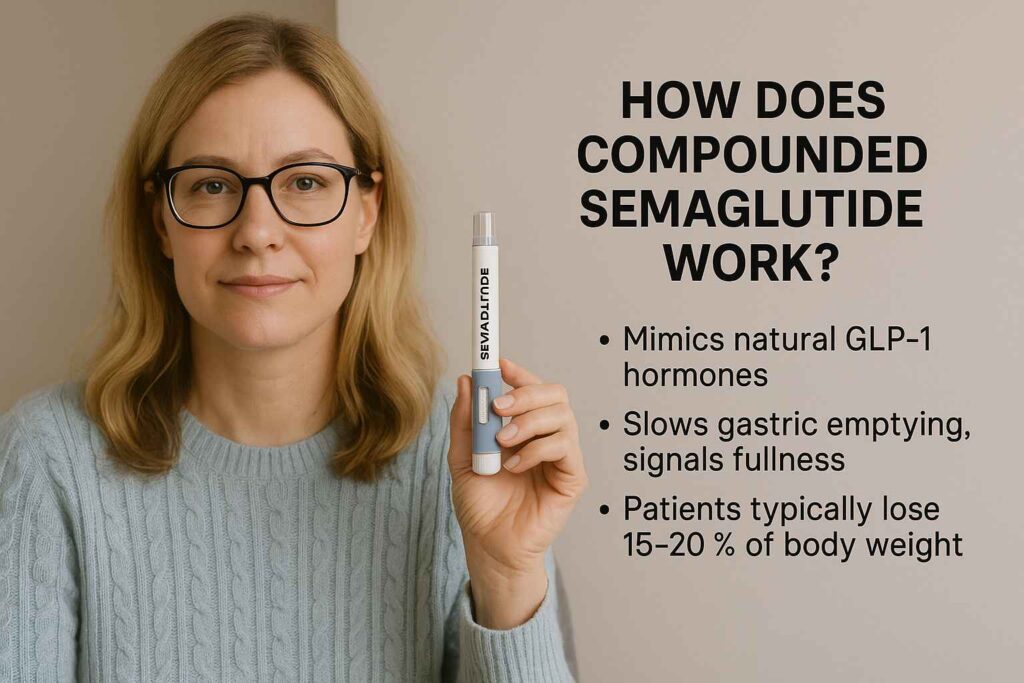
Whether you inject brand-name Ozempic or a compounded GLP-1 solution, the mechanism of action within your body is virtually identical. Both medications mimic the naturally occurring GLP-1 hormone, which plays a crucial role in regulating appetite and digestion.
The Mechanism of Action
When you administer a dose, the semaglutide binds to GLP-1 receptors in your pancreas and brain. This binding triggers several physiological responses:
- Appetite Suppression: The medication signals the hypothalamus—the brain's appetite center—to increase feelings of fullness. Patients often report a reduction in "food noise" or obsessive cravings by up to 65%, making portion control effortless rather than a constant battle of willpower.
- Slowed Gastric Emptying: The medication causes the stomach to empty its contents into the small intestine more slowly. This means you feel physically fuller for longer after eating, which naturally reduces caloric intake.
- Metabolic Reset: Beyond simple calorie restriction, semaglutide helps address metabolic dysfunction. It improves insulin sensitivity, allowing the body to utilize glucose more effectively rather than storing it as fat. This is vital for addressing the genetic and hormonal factors that account for nearly 70% of weight determination.
Because the active ingredient is the same, compounded GLP-1 therapy achieves these effects just as effectively as the branded version.
Which Treatment Delivers Better Weight Loss Results?
Efficacy is the top priority for any patient. Fortunately, clinical data and real-world evidence indicate that there is virtually no difference in weight loss outcomes between compounded semaglutide and Ozempic. The results are driven by the semaglutide molecule, not the brand label on the packaging.
Patients using either treatment typically lose between 15% and 20% of their total body weight over an extended period. At MEDVi, our patients utilizing compounded GLP-1 therapy report an average body weight loss of 18%, mirroring the outcomes seen in rigorous clinical trials for Wegovy and Ozempic.
Real-World Patient Success Stories
The abstract statistics are impressive, but individual stories highlight the transformative power of these treatments. Here are a few examples from MEDVi patients who chose compounded options:
- Melissa C.: Over the course of 13 months, Melissa lost a staggering 119 pounds using compounded GLP-1 injections. She reported that the appetite suppression allowed her to adhere to a healthy lifestyle without the constant hunger that doomed her previous diet attempts.
- Sandra K.: In just 4 months, Sandra dropped 42 pounds. Beyond the scale, she noted significant improvements in cognition and energy levels, attributing her mental clarity to stabilized blood sugar levels.
- Michael P.: Michael’s results were multifaceted; he shed 48 pounds in 5 months while simultaneously gaining 17% more muscle mass. This highlights the importance of combining compounded GLP-1 therapy with resistance training and protein intake to preserve lean body mass during fat loss.
Cost Analysis: Why Compounded GLP-1 Saves You Thousands
For many Americans, the biggest barrier to accessing GLP-1 therapies is cost. The price disparity between brand-name Ozempic and compounded GLP-1 is staggering.
The High Cost of Brand Names
Ozempic was not originally priced with the average consumer in mind. Without insurance coverage, the costs are prohibitive:
- Monthly Cost: $1,000 to $1,500+ per month without insurance.
- Annual Cost: Over $23,988 per year for continuous treatment.
- Insurance Hurdles: Many insurers refuse to cover Ozempic for weight loss (considering it a lifestyle drug rather than a medical necessity) or impose prior authorization hurdles that can take months to clear.
- Supply Shortages: Due to high demand, even patients with deep pockets often find pharmacies are out of stock.
The Affordability of Compounded GLP-1
Compounded GLP-1 medications bypass the brand-name pricing structures and the complex supply chains. Providers like MEDVi partner directly with compounding pharmacies to offer these medications at a significantly lower price point:
- Starting Price: As low as $179 per month.
- Savings: This represents a savings of over 70% compared to the retail price of Ozempic.
- Transparency: Providers like MEDVi offer no hidden fees, doctor-led plans, and transparent pricing.
By choosing the compounded route, you are essentially paying for the medicine itself, rather than subsidizing the massive marketing and research budgets of a multinational pharmaceutical corporation.
🎯 Ready to Transform Your Health?
Get your free personalized assessment now
Start Your Free Test Learn More