Semaglutide Pills vs Injection: Which GLP-1 Form Is Right for Your Weight Loss Journey?
Choosing between Semaglutide Pills vs Injection is a pivotal decision for anyone embarking on a medical weight loss journey. As GLP-1 receptor agonists revolutionize the treatment of obesity and type 2 diabetes, patients now have more options than ever before. However, understanding the nuanced differences between these two administration methods is crucial for achieving optimal results.
Both forms of this breakthrough medication work by mimicking the glucagon-like peptide-1 (GLP-1) hormone, which regulates appetite and insulin secretion. You can discover our approach for additional information. Yet, they differ significantly in bioavailability, lifestyle integration, and cost. This comprehensive guide breaks down the pros, cons, and efficacy of each form to help you decide if the convenience of a pill outweighs the potency of the injection, or vice versa.

What Is Semaglutide and How Does It Work?
Before diving into the comparison of Semaglutide Pills vs Injection , it is essential to understand the mechanism behind the medication itself. Semaglutide belongs to a class of drugs known as GLP-1 receptor agonists. In a healthy body, the intestine naturally releases GLP-1 after meals to signal fullness to the brain and stimulate insulin production.
For individuals struggling with weight loss resistance or metabolic disorders, this natural signaling is often impaired. Semaglutide steps in to:
- Suppress Appetite: It targets the hypothalamus to reduce cravings and increase the feeling of satiety.
- Slow Gastric Emptying: It delays the rate at which food leaves the stomach, keeping you fuller for longer periods.
- Regulate Blood Sugar: It improves insulin sensitivity and prevents dangerous spikes in blood glucose levels.
Unlike traditional fad diets that rely solely on willpower, semaglutide addresses the biological root causes of weight gain. Since nearly 70% of body weight is genetically influenced, this medication helps level the playing field by correcting metabolic dysregulation.
Semaglutide Injections: The Gold Standard
When patients think of GLP-1 therapies, injectable semaglutide is often the first form that comes to mind. Marketed under brand names like Ozempic® and Wegovy®, the injection has long been considered the "gold standard" for weight loss efficacy.
How Injectable Semaglutide Works
Injectable semaglutide is administered once weekly via a small, pre-filled pen. The medication is delivered subcutaneously —meaning it is injected into the fatty tissue just beneath the skin. This method bypasses the digestive system entirely, delivering the active ingredient directly into the bloodstream.
Because it avoids the harsh acidic environment of the stomach, injectable semaglutide boasts near-perfect bioavailability. This means the body can utilize almost 100% of the active compound, leading to consistent therapeutic levels in the blood.

Effectiveness of Semaglutide Injections
Clinical trials have established injectable semaglutide as one of the most effective weight loss medications available today. In the STEP (Semaglutide Treatment Effect in People with Obesity) clinical trials, participants experienced:
- Average weight loss of 15-20% of total body weight over 68 weeks.
- Six times more effective than diet and exercise alone.
- Long-term sustainability: 93% of patients maintained significant weight loss one year after starting treatment.
- Metabolic improvements: Significant reductions in waist circumference, blood pressure, and cholesterol levels.
Advantages of Injectable Semaglutide
Why do many patients and doctors prefer the needle?
- Superior Absorption: Direct delivery ensures maximum potency and consistent results.
- Once-Weekly Dosing: The convenience of a single weekly dose fits easily into a busy schedule.
- Proven Track Record: Extensive clinical data and years of patient use support its safety profile.
- Faster Results: Due to higher bioavailability, many patients report appetite suppression within days of the first injection.
Potential Drawbacks of Injections
Despite its efficacy, the injectable form is not without its downsides:
- Injection Anxiety: Trypanophobia (fear of needles) is a real barrier for many, though modern pens use ultra-fine needles that make the process virtually painless.
- Storage Requirements: Injectable semaglutide typically requires refrigeration until the first use, which can be less convenient for frequent travelers.
- Initial Learning Curve: First-time users must learn proper injection techniques, although this is quickly mastered.
Semaglutide Oral Tablets: A Needle-Free Alternative
For those who dread the thought of needles, oral semaglutide offers a compelling solution. While chemically similar to the injectable version, the formulation is engineered to survive the digestive tract—a feat that required significant pharmaceutical innovation.
How Oral Semaglutide Functions
Creating an effective oral version of a peptide hormone was challenging because stomach acid usually breaks down these molecules before they can be absorbed. To solve this, oral semaglutide is co-formulated with an absorption enhancer called SNAC (sodium N-[8-(2-hydroxybenzoyl)amino]caprylate).
SNAC temporarily protects the semaglutide molecule and facilitates its absorption through the stomach wall. However, this process is less efficient than an injection, requiring patients to take the pill daily rather than weekly.
Effectiveness of Semaglutide Pills
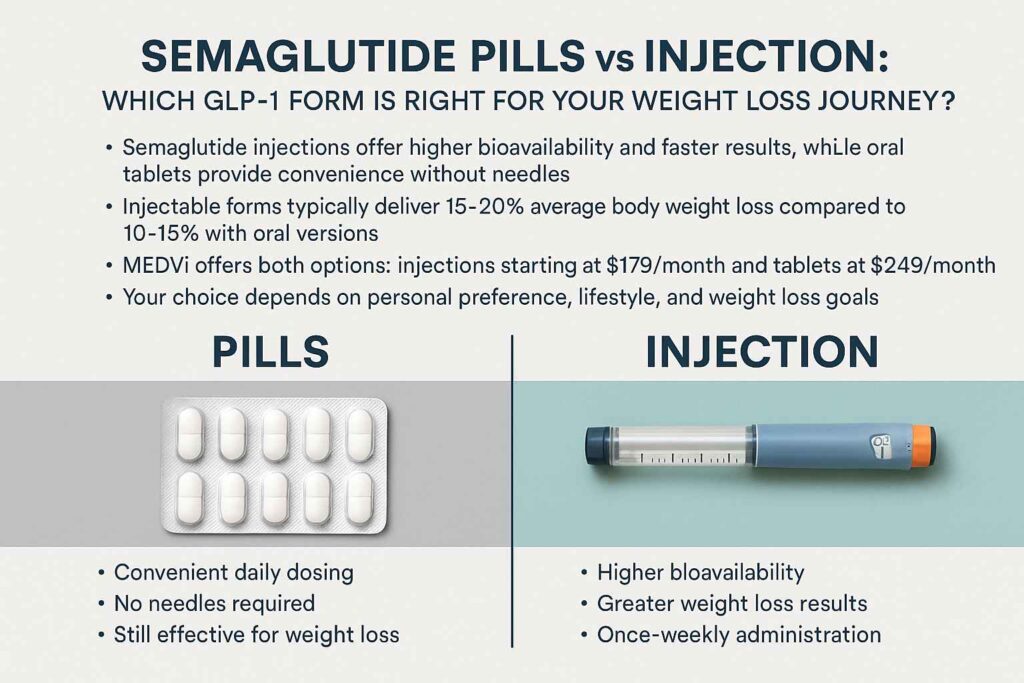
While oral semaglutide is highly effective, studies indicate it is slightly less potent than its injectable counterpart due to lower bioavailability. Clinical data suggests:
- Average weight loss of 10-15% of total body weight.
- Daily adherence required: Because it has a shorter half-life in the body, missing a dose can disrupt its effectiveness more than missing a weekly shot.
- Significant metabolic benefits: Like the injection, it offers excellent blood sugar control and cardiovascular benefits.
Benefits of Oral Semaglutide
The primary advantage of oral semaglutide is psychological and logistical convenience:
- Needle-Free: Ideal for patients with severe needle phobia.
- Discreet: Taking a pill is easy to do anywhere without drawing attention.
- No Refrigeration: Oral tablets generally do not require refrigeration, simplifying storage and travel.
Considerations for Oral Tablets
Choosing the pill requires strict adherence to specific instructions:
- Dosing Schedule: It must be taken once daily, preferably at the same time every morning.
- Fasting Requirement: You must take the pill on an empty stomach with no more than 4 ounces of plain water. You must wait 30 minutes before eating, drinking, or taking other medications. This ensures the drug can pass through the stomach and be absorbed properly.
Head-to-Head Comparison: Semaglutide Pills vs Injection
To visualize the differences, let's look at a direct comparison of the two forms.
| Feature | Semaglutide Injections | Semaglutide Pills |
|---|---|---|
| Administration Frequency | Once Weekly | Once Daily |
| Average Weight Loss | 15-20% | 10-15% |
| Bioavailability | High (Direct to bloodstream) | Moderate (Requires absorption enhancer) |
| Restrictions | Refrigeration often needed | Must be taken on empty stomach, fast 30 mins post-dose |
| Best For | Maximum weight loss, busy lifestyles | Needle-phobic patients, daily routine adherents |
Side Effects and Tolerability
When considering Semaglutide Pills vs Injection , side effects are a common concern. Both forms share similar side effect profiles because the active ingredient is the same. The most common adverse reactions include:
- Nausea and Vomiting
🎯 Ready to Transform Your Health?
Get your free personalized assessment now
Start Your Free Test Learn More