Learn the Standard Semaglutide Dosage for Weight Loss: Your Complete Guide
If you are exploring medical weight loss solutions, you have likely heard about the transformative potential of GLP-1 medications. To achieve the best possible outcomes, it is crucial to learn the standard Semaglutide dosage protocols and how they are tailored to individual needs. Semaglutide has revolutionized the treatment of obesity, offering a scientifically backed path to significant weight reduction. However, success is not just about taking the medication; it is about following a specific titration schedule that maximizes efficacy while minimizing adverse reactions.
This comprehensive guide will walk you through everything you need to know about dosing, from the initial starting phase to long-term maintenance. Whether you are just starting your journey or looking to optimize your current regimen, understanding the nuances of Semaglutide dosing is the first step toward sustainable health.

What Is the Standard Semaglutide Dosage for Weight Loss?
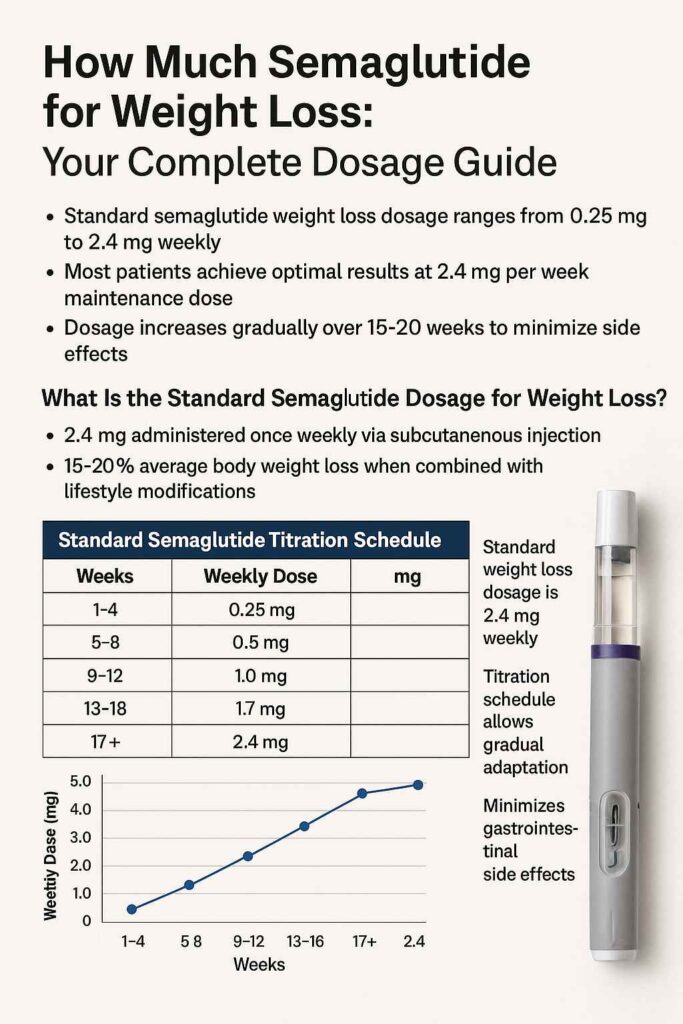
The FDA-approved therapeutic dose of Semaglutide for weight management is 2.4mg administered once weekly via subcutaneous injection. This specific dosage is the result of extensive clinical trials, such as the STEP studies, which demonstrated that this amount offers the highest efficacy for reducing body weight in adults with obesity or overweight with at least one weight-related condition.
However, reaching the 2.4mg maintenance dose does not happen overnight. To ensure safety and tolerability, patients must follow a strict titration schedule. You can explore GLP-1 medications for additional information. Jumping straight to the maximum dose can lead to severe gastrointestinal distress. Therefore, the standard protocol involves a gradual increase over several months.
When you learn the standard Semaglutide titration schedule, you will see it typically follows this structure:
- Weeks 1-4: 0.25mg once weekly
- Weeks 5-8: 0.5mg once weekly
- Weeks 9-12: 1.0mg once weekly
- Weeks 13-16: 1.7mg once weekly
- Week 17+: 2.4mg once weekly (maintenance dose)
This slow escalation allows your body to adapt to the medication’s effects on the gastric system, significantly reducing the likelihood of nausea, vomiting, and other side effects.

Semaglutide Dosing Schedule: Week by Week Breakdown
Understanding the timeline of your treatment is essential for managing expectations. Here is a detailed look at what to expect during each phase of the dosing schedule.
Starting Phase (Weeks 1-4): 0.25mg Weekly
The journey begins with the lowest dose. During this first month, the primary goal is not necessarily weight loss, but rather tolerability. The 0.25mg dose is intended to introduce the medication to your system with minimal impact.
- Goal: Assessing how your body reacts to the GLP-1 receptor agonist.
- Expectations: You may not see significant changes on the scale yet.
- Benefits: Some patients report a slight decrease in appetite or easier portion control during this phase.
Escalation Phase (Weeks 5-12): 0.5mg to 1.0mg Weekly
As you move into the second and third months, the dosage increases. This is where the medication begins to work more actively on your appetite regulation centers.
- Weeks 5-8 (0.5mg): Appetite suppression becomes more noticeable. You may feel full sooner than usual.
- Weeks 9-12 (1.0mg): This is a turning point for many. The "food noise" or constant thoughts about eating often diminish significantly here.
- Physical Changes: Most patients begin to see noticeable weight loss on the scale during this escalation phase.
Optimization Phase (Weeks 13-16): 1.7mg Weekly
Approaching the higher therapeutic ranges, the 1.7mg dose provides substantial metabolic benefits. Your body is now adapting to a stronger level of appetite suppression and delayed gastric emptying.
- Effect: Patients typically report feeling satisfied with much smaller meals.
- Cravings: Intense cravings for sugars and carbohydrates are often drastically reduced.
- Monitoring: It is vital to monitor side effects closely during this jump to ensure you are ready for the final maintenance dose.
Maintenance Phase (Week 17+): 2.4mg Weekly
The final stage is the maintenance phase. At 2.4mg, the medication is at full potency. This is the dose referenced in clinical trials where patients achieved an average of 15% body weight loss.
- Long-term Management: This dose is used to maintain weight loss over the long term.
- Sustainability: Combined with lifestyle changes, this dose helps solidify new, healthier habits.
How Much Weight Can You Lose with Semaglutide?
Clinical studies demonstrate remarkable results when patients adhere to the prescribed dosing schedule. It is important to note that individual results vary based on starting weight, metabolism, and lifestyle adherence.
- Average Weight Loss: Patients using the 2.4mg dose lost approximately 15-20% of their starting body weight over 68 weeks.
- Timeframe: Significant results are typically seen within 12-16 weeks of consistent treatment.
- Comparison: This approach has been shown to be roughly 6x more effective than diet and exercise alone.
For a concrete example, a person weighing 200 pounds might expect to lose between 30 and 40 pounds over the course of treatment with the standard 2.4mg weekly dose.

Factors That Influence Your Semaglutide Dose
While the standard schedule works for most, healthcare providers may adjust your protocol based on several individual factors. It is not a "one size fits all" solution.
Body Weight and BMI
Your starting Basal Metabolic Index (BMI) plays a role in how your body metabolizes the drug. Higher body mass may sometimes require different considerations, although the standard titration usually applies universally.
Tolerance to Side Effects
This is the most critical factor. If you experience significant nausea or gastrointestinal issues at a specific dose, your doctor may delay the escalation to the next level. It is always better to stay at a lower dose longer than to suffer through side effects at a higher dose.
Weight Loss Goals
Some patients may reach their desired weight loss goal before reaching the 2.4mg maintenance dose. In such cases, the maintenance dose might be adjusted to the lowest effective dose that keeps the weight stable.
Individual Response
Genetics and individual biochemistry mean that some people are "super-responders" who lose weight quickly on lower doses, while others need the full 2.4mg to see results.
Lifestyle Modifications
The medication works best as a tool to support lifestyle changes. Your diet and exercise level will influence how effective the dosage is and how quickly you can titrate up.

How to Properly Administer Your Semaglutide Dose
Proper administration ensures the medication is absorbed effectively. Sem
🎯 Ready to Transform Your Health?
Get your free personalized assessment now
Start Your Free Test Learn More