How Long Can You Take Semaglutide for Weight Loss?
When embarking on a weight loss journey with GLP-1 medications, one of the most common questions patients ask is: How long can you take Semaglutide safely and effectively? Unlike short-term diet pills, Semaglutide is designed to address the chronic biological nature of obesity. Understanding the duration of treatment is crucial for setting realistic expectations and achieving sustainable results.
For many individuals, Semaglutide is not a temporary fix but a long-term management strategy for a chronic condition. Below, we explore the clinical data, safety profiles, and real-world patient experiences to answer the question of how long can you take Semaglutide for optimal weight management.

TL;DR Summary: Semaglutide Duration
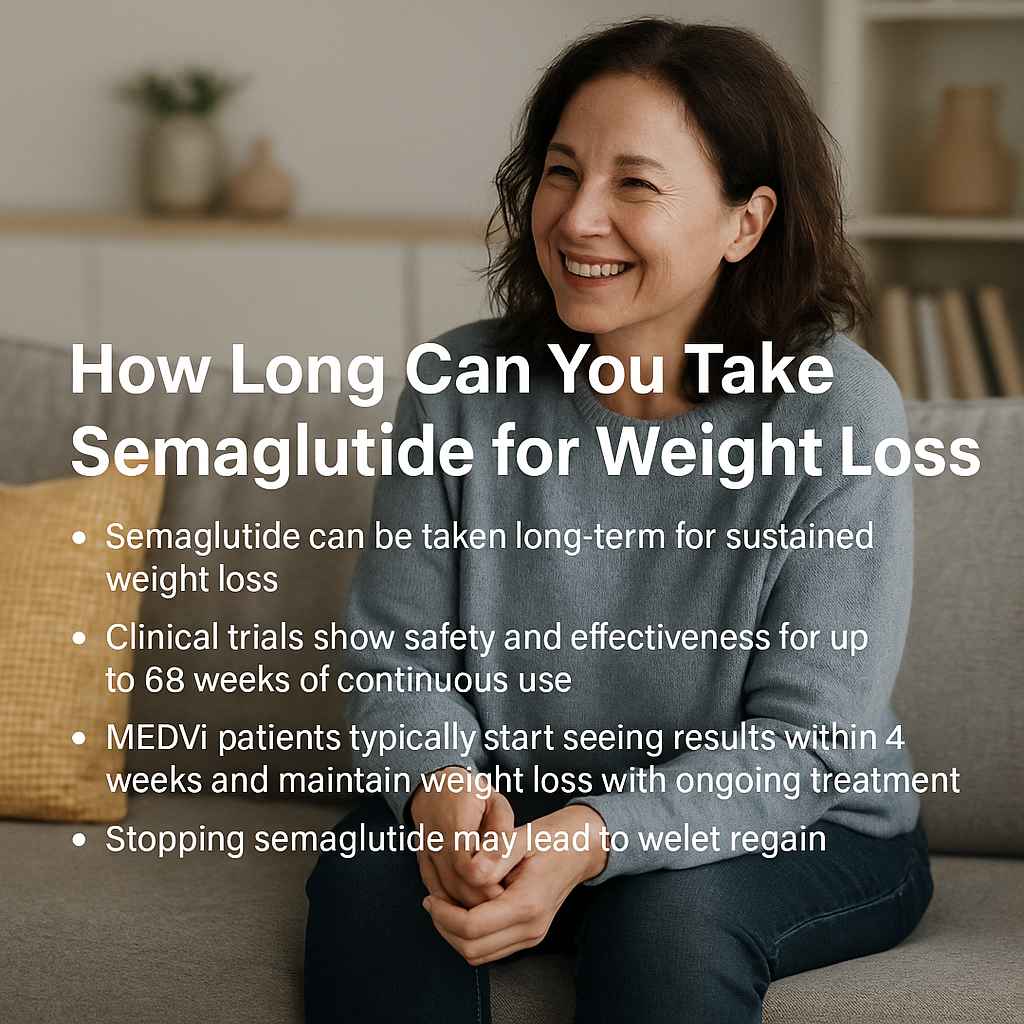
- Long-term Use: Semaglutide can be taken long-term, often for years, similar to medications for high blood pressure or diabetes.
- Clinical Support: Major clinical trials validate safety and effectiveness for up to 68 weeks of continuous use, with ongoing studies extending further.
- Patient Results: MEDVi patients typically start seeing significant results within 4 weeks, with sustained success linked to ongoing treatment.
- Discontinuation Risks: Stopping Semaglutide abruptly often leads to weight regain, as appetite regulation returns to baseline levels.
What Is Semaglutide and How Does It Work?
To understand how long can you take Semaglutide , it is helpful to first understand how the medication functions within the body. Semaglutide belongs to a class of medications known as GLP-1 receptor agonists (Glucagon-Like Peptide-1). These medications mimic a natural hormone in your body that regulates appetite and blood sugar levels.
Traditional dieting often fails because it fights against your body's survival instincts. Semaglutide works differently—it works with your body's physiology. It signals the brain to reduce cravings and delays gastric emptying, helping you feel full sooner and longer after eating.
This mechanism addresses what medical experts often refer to as a "broken metabolism"—the genetic and hormonal dysregulation that makes traditional dieting ineffective for nearly 70% of people struggling with weight management. Because these biological factors do not simply disappear, the medication often provides necessary ongoing support.
How Long Do Clinical Studies Support Semaglutide Use?
When considering how long can you take Semaglutide , we look to rigorous clinical trials for guidance. The most comprehensive data comes from the STEP (Semaglutide Treatment Effect in People with Obesity) clinical trials. These studies specifically focused on patients without type 2 diabetes and spanned 68 weeks of continuous treatment.
In these trials, patients maintained a dose of 2.4 mg per week while adhering to a reduced-calorie diet and increased physical activity regimen. The results were groundbreaking, not just in terms of weight loss, but in demonstrating that the medication remained effective and safe over this extended period.
Key Findings from Long-Term Clinical Research:
- Significant Weight Reduction: Patients achieved an average of 15% to 20% total body weight reduction.
- Maintenance of Results: Unlike other interventions where weight loss plateaus early, 93% of participants in the study continued to keep the weight off throughout the 68-week period.
- Safety Profile: Side effects (primarily gastrointestinal) were found to be manageable and did not increase in severity with long-term use.
- Sustained Efficacy: No significant "tolerance" was built up, meaning the medication continued to work effectively throughout the duration of the study.
While the formal trials lasted 68 weeks, real-world data and extension studies suggest that the benefits can persist safely for much longer durations under medical supervision.
What Happens When You Stop Taking Semaglutide?
A critical factor in deciding how long can you take Semaglutide is understanding what happens when you stop. Research consistently indicates that discontinuing Semaglutide typically leads to weight regain.
When you cease treatment, the medication's appetite-suppressing and metabolism-regulating effects dissipate. Your body’s natural hunger signals—often heightened in individuals with obesity history—return to pre-treatment levels. The "set point" of your body weight may attempt to revert to its previous state.
This phenomenon draws a parallel to other chronic conditions. Just as stopping blood pressure medication leads to a rise in blood pressure, stopping weight management medication leads to a rise in weight. For this reason, many experts in the medical community view Semaglutide as a long-term therapy rather than a temporary course of treatment.
How Long Do MEDVi Patients Stay on Semaglutide?
At MEDVi, we have observed that patient success is often correlated with the duration of treatment. Our data suggests that successful patients often continue Semaglutide treatment for months to years. Our program is structured to support long-term success rather than short-term "crash" diets.
Real-world success stories from our platform illustrate the power of consistent, long-term use:
- Melissa C. lost 119 pounds over 13 months of continuous treatment, changing her relationship with food entirely.
- Sandra K. maintained her 42-pound loss throughout 4 months of treatment and continues to use the medication to stabilize her progress.
- Michael P. saw steady improvements over a year, utilizing the medication to break through weight loss plateaus he had struggled with for decades.

Is Long-Term Semaglutide Use Safe?
Safety is a primary concern when asking how long can you take Semaglutide . Currently, the FDA has approved Semaglutide for long-term use in the treatment of obesity (under the brand name Wegovy) and for Type 2 diabetes (under the brand names Ozempic and Rybelsus).
Long-term safety monitoring has not identified any new risks that emerge specifically from extended duration of use compared to short-term use. The most common side effects include nausea, vomiting, diarrhea, and constipation, which usually subside as the body adjusts to the medication. However, patients are monitored for rare risks such as pancreatitis or gallbladder issues, which is why doctor-led supervision is essential.
What Factors Influence How Long You Should Take Semaglutide?
There is no "one size fits all" answer to how long can you take Semaglutide . The duration is highly individualized based on several factors:
Your Weight Loss Goals
If you have a significant amount of weight to lose, the treatment duration will naturally be longer. Patients are generally kept on the medication until they reach their goal weight and often transition to a maintenance phase to prevent regain.
Individual Response to Treatment
Everyone metabolizes medication differently. Some patients may achieve substantial weight loss quickly, while others require a longer duration on higher doses to see similar results. Your healthcare provider will adjust your timeline based on your specific response.
Underlying Health Conditions
For patients with comorbidities like Type 2 diabetes, hypertension, or sleep apnea, long-term use may be recommended to manage these conditions alongside weight loss.
Lifestyle Factors
Semaglutide is most effective when combined with lifestyle changes. Patients who successfully integrate healthy eating and regular exercise may eventually maintain their weight with a lower dose or less frequent medical intervention, though this varies by individual.

How Does MEDVi Support Long-Term Semaglutide Treatment?
Deciding how long can you take Semaglutide is a collaborative decision between you and your healthcare provider. MEDVi facilitates this through a comprehensive support system designed to make long-term treatment accessible and safe.
- Doctor-led plans & coaching: Our board-certified providers monitor your progress regularly, adjusting your dosage and treatment duration as needed.
- No hidden fees: Transparent pricing ensures you can budget for your long-term health journey without surprises.
- MEDVi money back guarantee: We stand by our program. If you don't see results, we offer a money-back guarantee (terms apply), giving you peace of mind as you commit to the process.
- Free, expedited delivery: We ensure your medication arrives on time, every time, so you never have to interrupt your treatment schedule.
Can You Take Semaglutide for Life?
While "for life" is a strong term, it is medically plausible that some patients may remain on Semaglutide indefinitely to maintain a healthy weight and metabolic health. Just as someone with asthma might use an inhaler for years, someone with obesity may use GLP-1 agonists long-term. The decision is based on a
🎯 Ready to Transform Your Health?
Get your free personalized assessment now
Start Your Free Test Learn More